The Best Nonstick Cookware

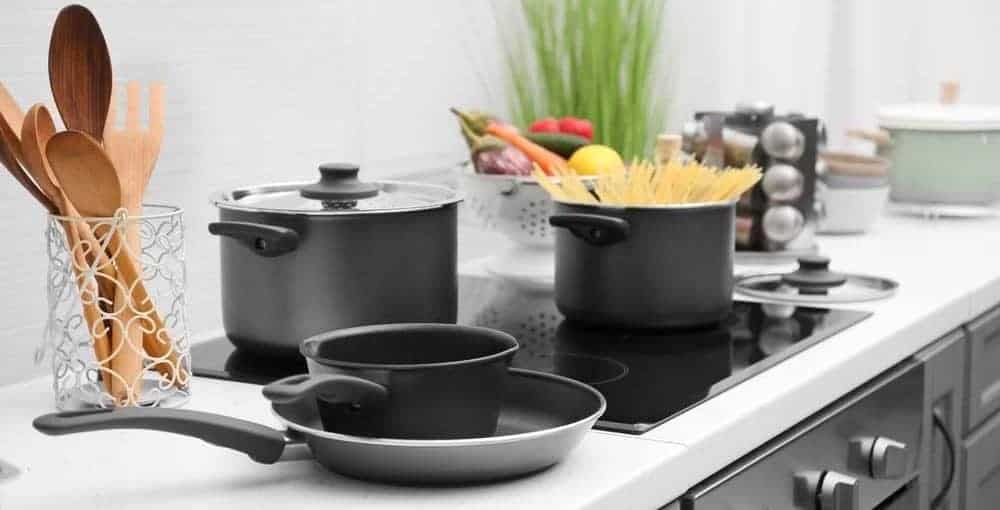
The convenience of nonstick cookware cannot be beat.
You do not have to worry about scraping out your pans after making a meal. Cleaning is quick and easy.
So, what’s the problem?
Well, with concerns about nonstick cookware potentially being toxic, you might be rightfully hesitant about purchasing nonstick cookware these days.
Maybe it is simply better to deal with sticky, goopy pans, then to possibly have toxins baked into your food.
But is that really the case? And, if you are going to buy nonstick cookware, what type of cookware would be safe?
We will attempt to answer some of those questions, as well as provide recommendations on the best nonstick cookware, in this article.
Compare Products
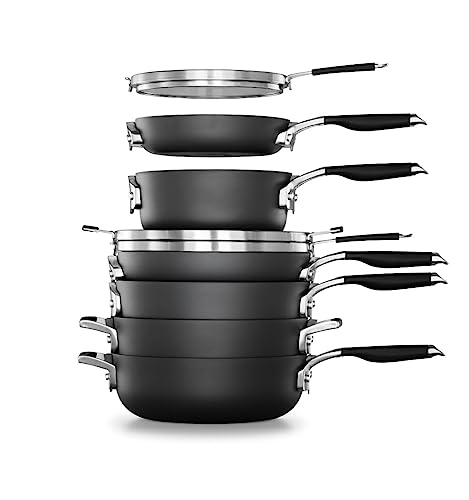
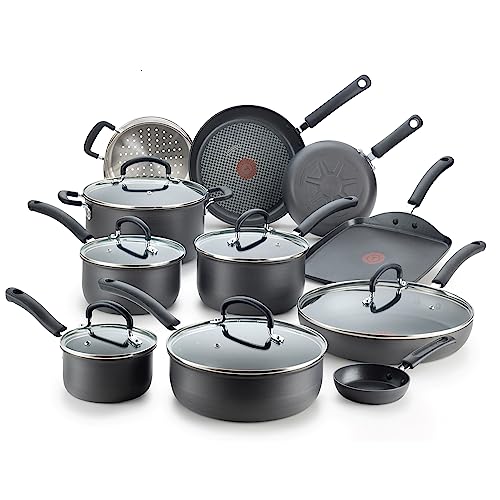
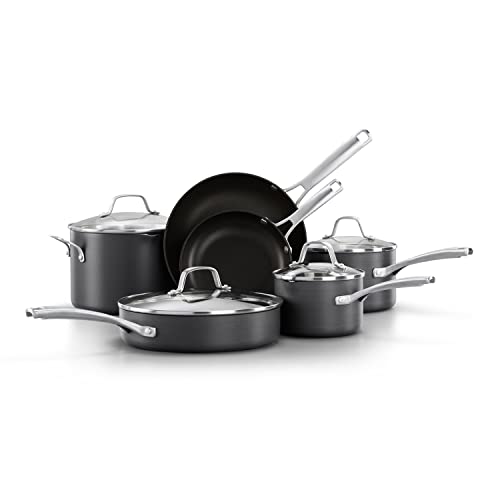
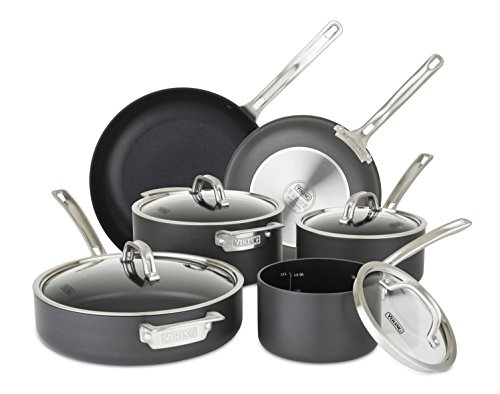


- Friedokra Score9.4
FriedOkra scores from 0 to 10 are automatically scored by our AI consumer report tool based on the data collected. This score has no relationship or impact from any manufacturer or sales agent websites. Read more
- BrandKitchenAid
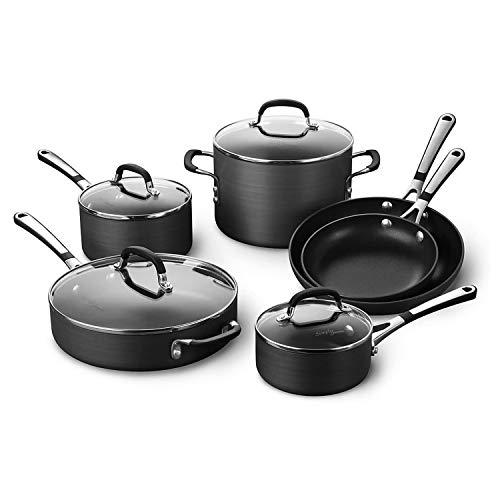


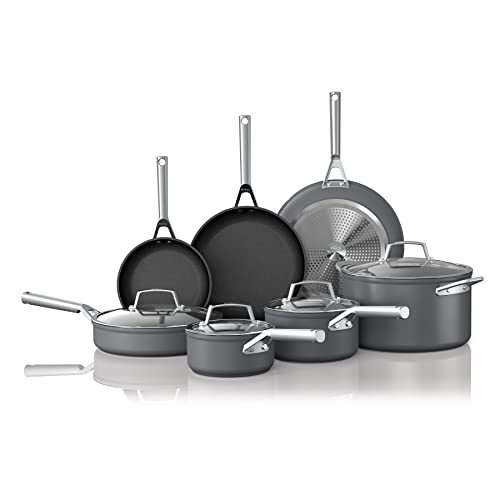
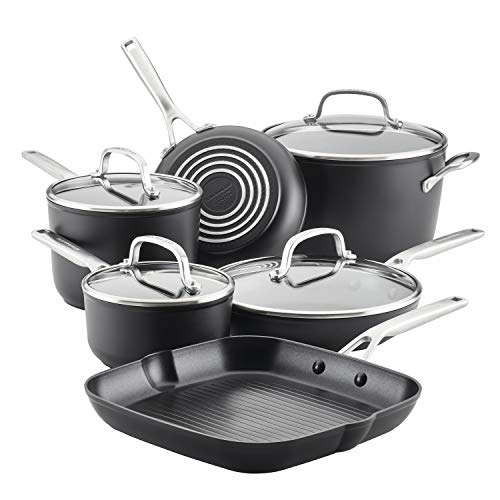
- Friedokra Score9.2
FriedOkra scores from 0 to 10 are automatically scored by our AI consumer report tool based on the data collected. This score has no relationship or impact from any manufacturer or sales agent websites. Read more
- BrandKitchenAid


Last update on 2024-07-19 / Affiliate links / Images, Product Titles, and Product Highlights from Amazon Product Advertising API
This might seem like a basic question, but it is not. Before we delve into nonstick cookware, it would be helpful to have a clear definition of what it is, as well as an overview of the different types of non-stick cookware available on the market today.
A Definition of Non-Stick Cookware
Nonstick cookware is any type of cookware, such as pots or pans, that has a special nonstick coating that allows food to glide on the pan instead of sticking to it.
Cookware that has non-stick properties gets that way due to some sort of special coating or layer that is applied to it during the manufacturing process.
Nonstick cookware got its start by accident.
A scientist named Roy Plunkett was researching how to use a less toxic chemical for refrigeration in 1938. He set up a mixture designed to create a specific type of gas and let it sit overnight. Instead of finding gas the next day, he found something that was pale and wax-like.
This new compound was polytetrafluoroethylene or PTFE. This is now known as Teflon, which was later marked by DuPont. The compound was found to be extremely slippery.
Later, in the 1950s, a French engineer named Marc Gregoire designed a way to securely apply Teflon to aluminum. (Technically, Teflon is the brand name for a particular type of PTFE, but it is easier to use the term Teflon generically when referring to polytetrafluoroethylene.)
In 1960, Teflon was approved for the processing of food by the FDA. Soon pots and pans with Teflon-type nonstick coating were sold on the market.
In the last ten years or so, an alternative to Teflon nonstick pans has arrived in the form of ceramic. Ceramic nonstick pots and pans are made using a glazing method. Supposedly, they are a bit more eco-friendly than Teflon.
Nonstick cookware is extremely popular for a variety of reasons. The benefits of nonstick cookware and bakeware include:
1. Food Does Not Stick on It
This is an obvious point after all, it is called nonstick cookware for good reason. However, the fact that food does not stick on the cookware means that you are less likely to have food stuck to the bottom of a pan, which is more likely to burn or scorch.
2. It Is Easier to Clean
Once you are done cooking with your nonstick cookware, it is much faster and easier to clean. All you need is a decent sponge with some dish soap and water, and you are good to go.
Do not use extremely abrasive cleaning materials with your nonstick cookware, especially steel wool. With cheaper types of nonstick cookware, you might end up harming the surface of the pan.
3. You Do Not Need to Cook with As Much Oil
Nonstick cookware has a potential health benefit in that you do not have to use as much cooking oil such as canola oil when you are cooking. The nonstick surface is a stand-in for that extra lubrication you get with cooking oil.
If you are trying to lose weight by reducing calories or improve your heart health by lowering the amount of unhealthy fats in your diet, nonstick cookware can be very helpful in this regard.
4. Non-stick cookware is Usually Inexpensive
You can find a lot of different types of nonstick cookware for affordable prices. This is one of the benefits of nonstick cookware. Traditional cookware that is of decent quality tends to be pricier.
However, you need to be careful, as really cheap nonstick cookware is generally of a lower quality. This means it is more likely to chip or flake.
The big controversy with nonstick cookware is whether or not is toxic or dangerous for your health.
There is also some confusion about the potential for toxicity many people do not understand how or why Teflon-coated cookware might be problematic.
There are actually three main concerns with cookware that are designed to be nonstick:
1. Toxicity During the Manufacturing Process
The potential toxicity problems with nonstick cooking pans stem from two four-letter acronyms: PTFE and PFOA, both containing the letters P and F. PTFE are, of course, Teflon.
PFOA stands for perfluorooctanoic acid. This is a chemical that has been used in the manufacturing of Teflon-type cookware.
It is potentially dangerous to animals when leaked out into the environment. More modern manufacturing technologies may avoid this hazard, but it depends on the company.
2. Toxicity During Cooking
Teflon is relatively safe when used for low to moderate-heat cooking on the stovetop. It is when you get to higher temperatures that it becomes problematic.
At high temperatures, Teflon (or PTFE) emits dangerous gasses that can sicken or kill small house pets such as birds. It won't kill humans (at least immediately) but it could make you have some flu-like symptoms.
The exact temperature that this off-gassing occurs is not known, but it could be at temperatures as low as 464 degrees Fahrenheit.
You probably won't hit that temperature if you are not searing a steak so most of the time you should not worry about it.
But, do not use your nonstick pans for high-heat searing, and do not pre-heat them, with or without oil, which could get the temperature a bit too high.
3. Accidental Consumption of Non-Stick Flakes
A third concern about nonstick cookware is what might happen to people who accidentally consume little bits of nonstick coating that has flaked off.
Most "experts" say that this is not a concern, as the substance will simply pass through the stomach and intestines without being digested. It is also rare that you would consume such as thing.
However, can anyone say with absolute certainty they know what actually happens to that little piece of Teflon as it goes through your digestive tract? Have studies been fully done on this? Probably not.
You may not like the idea of PTFE going through your body, and that is entirely understandable.
To avoid this issue, do not buy the absolute cheapest, no-name brand of nonstick cookware, as it is much more likely to peel or flake off. Cookware that has two or three layers of nonstick coating will be more durable.
Also, do not use metal knives, spoons, or forks, as they tend to damage the nonstick-coated surface. Use plastic or wood utensils when cooking with your nonstick sauté pan. This should hopefully minimize the flaking of the nonstick coating.
Now that you know about the benefits and potential dangers of nonstick cookware, you can make better choices when purchasing new pots and pans. Here are some tips:
1. Do Not Buy Super Cheap Generic "Teflon" Cookware
The cheapest non-stick PTFE cookware will have only one layer of coating and no protective coating on top of that.
The surface will feel slightly rough or bumpy to the touch. Look for cookware that has two or three layers from a brand with a good reputation.
2. Consider Buying Ceramic Non-Stick Cookware
Ceramic-coated pots and pans may be a safer alternative to Teflon aka PTFE nonstick cookware. They do not have the issue of off-gassing chemicals, and they may be more environmentally friendly in the manufacturing process.
Here’s the thing: Nothing is truly “good for the environment” when it is a mass-produced, manufactured product.
All product creation involves some sort of environmental impact. The question is, does the manufacturing leave toxic chemicals in the air, water, or soil that would impact wildlife?
3. Look for PTFE and PFOA Free Non-Stick Cookware
If you have concerns about Teflon (aka PTFE) and its manufacturing process, you have plenty of other options these days. Look for cookware advertised as “PTFE and PFOA Free.” They will not say “Teflon Free” (most likely) as that is a registered trademark.
4. Make Sure You Get Compatible Cookware for Your Induction Stovetop
The newer induction stovetops require special types of cookware to work. This applies not only to nonstick pots and pans but also to traditional cookware such as stainless steel, copper, or aluminum.
The bottom of an induction-compatible pan must be magnetic. You can test this out at home with a magnet. Induction-friendly cookware that is also nonstick will be labeled as being induction-compatible.
For example, a few people have reported the glass lids to shatter on several Rachel Ray nonstick cookware sets. This is during basic cooking like spaghetti so be forewarned.
1. Vremi 8 Piece Ceramic Nonstick Cookware Set

- This 8-piece ceramic cookware set includes 2 Dutch oven pots, 1 casserole pot with lids, and 2 angled frying pan skillets...
- This pot and pan set is made of a durable and non-toxic die-cast aluminum body with a nonstick ceramic-coated surface...
- Features bakelite ergonomic wood tone handles for easy tossing and turning and lids that have small gaps between the lid and...
This set of nonstick cookware by Vremi, comes in bright yellow-green, and blue, with a white interior. It is not cheap at Amazon, but it gets great reviews with an average of 4.5 out of 5 stars.
This is a ceramic nonstick cookware set that includes two Dutch oven pots, one casserole pot, and two angled frying pans designed for easy omelet flipping.
2. T-fal Signature Nonstick Cookware Set
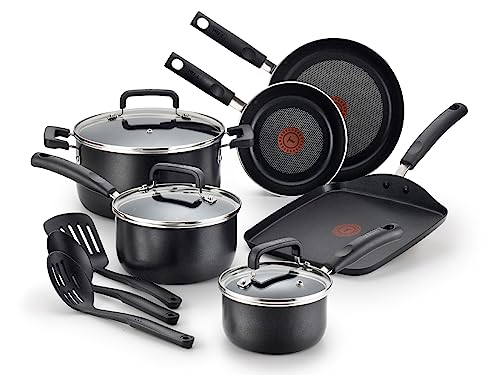
Set includes: 7.75-inch and 11-inch fry pans, 1 quart and 2-quart saucepans with lids, a 5.5-quart Dutch oven with lid,...
Dishwasher safe: Easy to clean and dishwasher safe cookware set; Nonstick interior and exterior for low fat cooking and...
Use and care: Safe for all cooking methods except induction; PFOA, Lead, and Cadmium free. Wash the frying pan in hot...
This is “Amazon’s Choice” on their website. It comes in a basic nonstick version for $ and induction-compatible nonstick for $$. The specifications for the different versions (induction compatible vs. regular) are slightly different.
The basic nonstick version is advertised as PFOA, lead, and cadmium-free. However, while it does not say so explicitly, these pans are most likely made from Teflon (PTFE). Just remember to not overheat the pans and you should be good.
3. BulbHead Red Copper Non-Stick Cookware Set
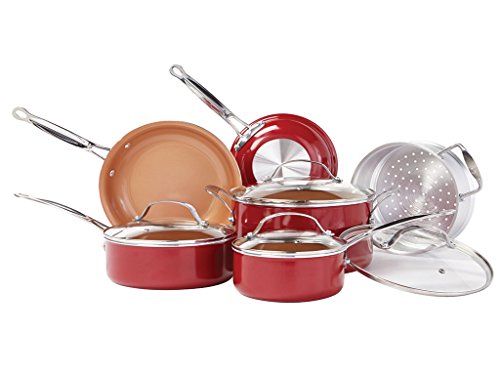
- Tough-grade copper-infused ceramic cookware set
- Non-stick and scratch-resistant cooking surface
- Oven safe up to 500 degrees Fahrenheit
This is another PFOA and PFTE-free option with great ratings that incorporates a copper-infused ceramic nonstick surface.
The set includes an 8-inch frying pan, a 10-inch frying pan with a lid, a 1.5-quart sauce pot with a lid, a 2.5-quart sauce pot with a lid, a 6-quart sauce pot with lid, and an aluminum steamer insert.
Nonstick cookware can be a very useful addition to your kitchen arsenal. The important thing is to use nonstick cookware wisely and carefully.
Do not use metal utensils when cooking with non-stick pots and pans to avoid damaging the surface and causing flakes.
Do not heat your nonstick frying pan to really high temperatures to avoid the off-gassing of potentially toxic fumes.
Try ceramic nonstick pans if you are concerned about Teflon coatings. By following these basic guidelines, you can use nonstick cookware safely.